Can osteoporosis drugs lower your risk of dementia?
Some osteoporosis drugs were linked to a 24% lower dementia risk, but the finding does not prove they prevent it.
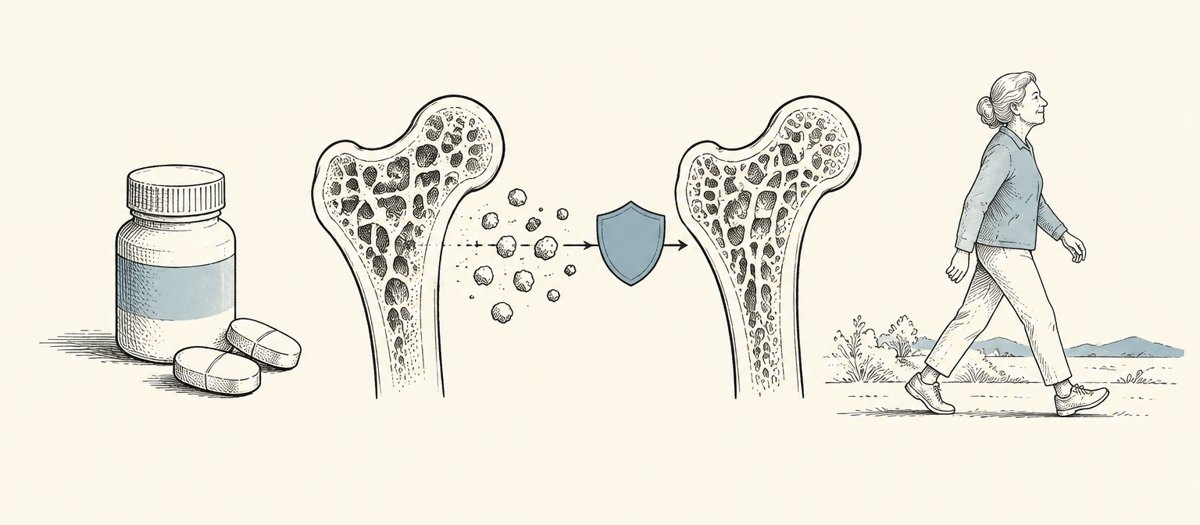
Researchers at the University of Hong Kong studied people with osteoporosis, which weakens bones. The study also included people with breaks caused by fragile bones. It examined a type of Bisphosphonates, medicines that slow bone breakdown. The type studied contains nitrogen, a chemical element. These drugs already help prevent bone loss and broken bones.
The study was published in Alzheimer's & Dementia. ScienceDaily reports a 24% lower dementia risk linked to these medicines. The supplied report does not give the number of people studied. It also leaves out follow-up time and the number who developed dementia. Those details matter when judging how large the possible benefit is.
The key distinction is between a link and a proven effect. This finding supports further testing, not a claim that these drugs prevent dementia. The researchers want to learn whether they can prevent or delay declining brain function. Their long history of use makes that question worth exploring. An existing bone treatment might have another benefit, but that remains unproven.
For BioSocial members, this is a reason to keep two questions separate. Your bone results can show changes over time. They cannot show whether a medicine is protecting your brain. Tracking Bone Mineral Density, treatment dates, and your experience can make community comparisons more useful. Shared notes can add context without turning personal changes into proof.
What changes have you seen in your bone results while using these medicines?

Comments
No comments yet.