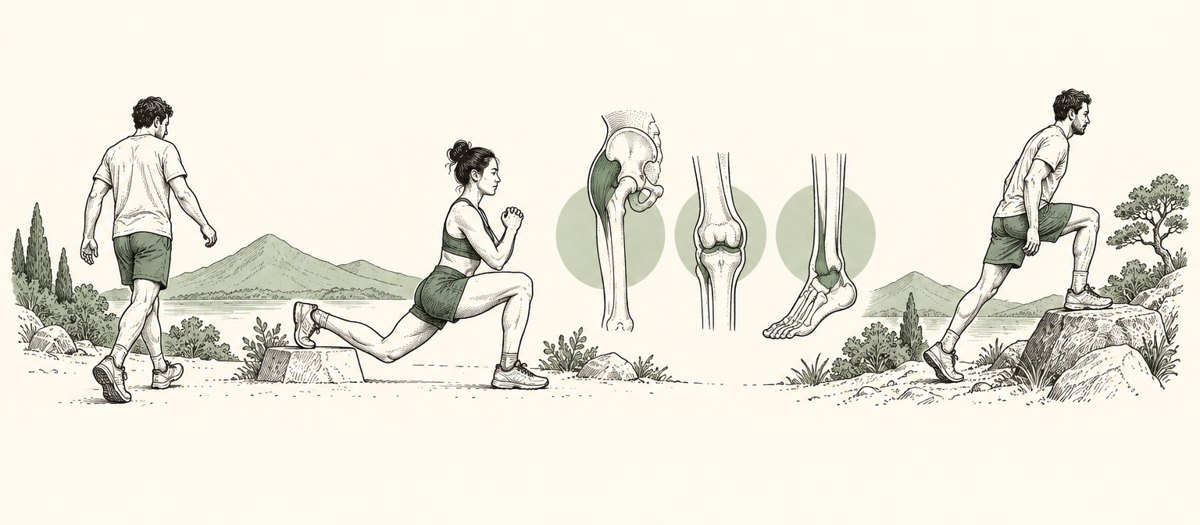
Is it bad for your knees to go past your toes in squats?
Not necessarily: blocking knee movement cut knee work about 20% but raised hip work roughly tenfold in one small study.
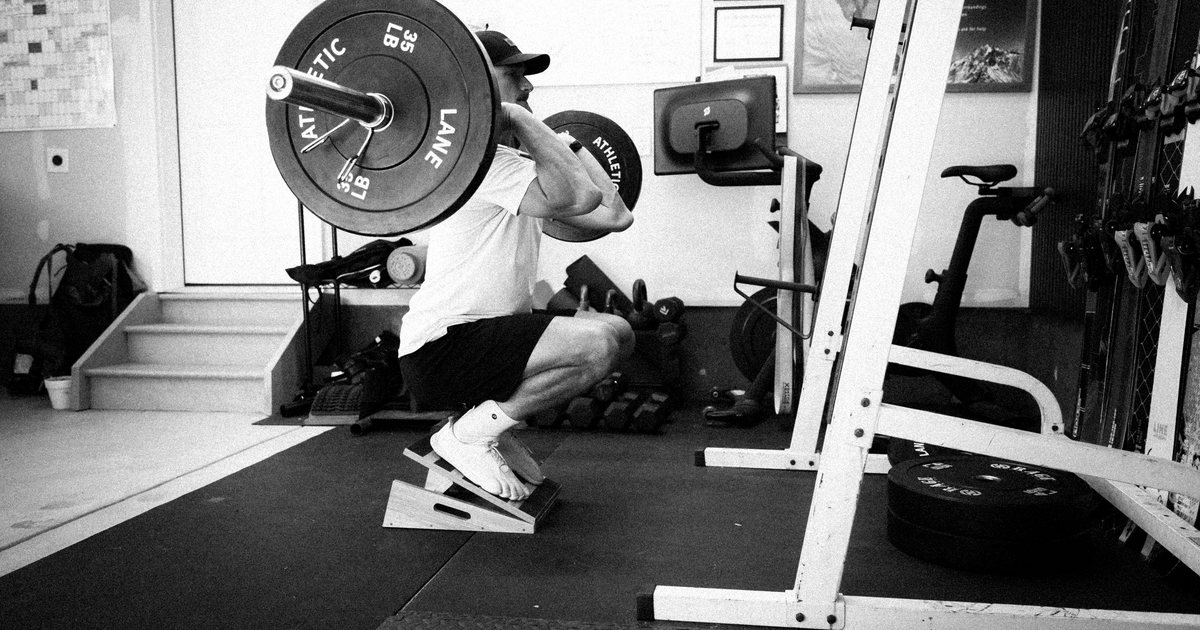
The Kneehaber article explores the case for Knees Over Toes Training. It highlights a 2003 study of seven lifters who squatted two ways. They first squatted normally, then with a wooden board blocking forward knee movement.
With their knees blocked, the lifters had to bend more at the hips. The researchers concluded that this likely shifted the load toward the hips and low back. Their takeaway: a proper squat may need some knee movement past the toes. Less work at the knee does not mean less work overall.
The article also reports findings on deeper squats and knee stability. A 1971 study found no meaningful difference between deep and half squats. In 1989, 100 college students did full or half squats for eight weeks. Their knee stability did not change. A 2013 review of more than 160 papers also challenged fears about deep squats. It stressed good technique and gradual increases in load.
These findings challenge a blanket rule against knees passing the toes. They do not prove that every deep squat suits every knee. Nor do they test the full training method as a package.
For BioSocial members, this makes training logs more useful than a rigid toe-line rule. Notes on squat depth, load, and comfort can add context to your numbers. Tracking Stair Speed (Ascent) could help describe changes in everyday movement. The studies summarized here do not establish gains in that measure. Comparing notes with the community can show how different routines feel over time.
What changes have you noticed in comfort or everyday movement as your squat depth has changed?
Comments
No comments yet.