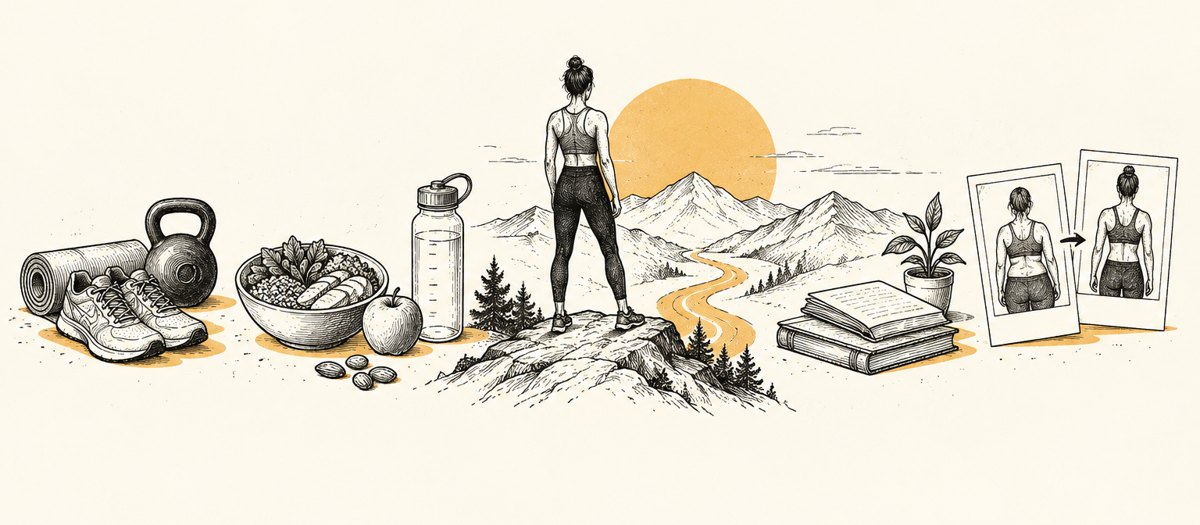
Does the 75 Hard Challenge offer special health benefits?
There’s no research showing this 75-day program offers unique health benefits, though it may help build consistency.
WalkingPad’s article reviews the 75 Hard Challenge, its rules, and its risks. It is an overview, not a study testing people’s results. Creator Andy Frisella describes it as a discipline program, not a workout plan. People choose their own diet and exercises, then complete every required task daily. Missing or changing one task means restarting at day one.
The habits matter more than the challenge label. The article points to regular activity, nutritious food, reading, and self-monitoring. It also includes Alcohol Reduction. These habits can help when they fit someone’s needs and last beyond the challenge. Losing pounds is not guaranteed. Results depend on food intake, activity, sleep, stress, medicines, and other factors.
The exercise target is substantial: two 45-minute sessions every day. That adds up to 10.5 hours each week. Workouts can be gentle, but repeated hard sessions leave less room for recovery. The article warns about declining performance, disrupted sleep, and injury from repeated strain. The restart rule also makes adapting around illness, travel, or family needs difficult.
For BioSocial members, finishing all 75 days is only one measure. Tracking Weight and Daily Steps before, during, and afterward could show personal patterns. Notes about workout effort and recovery can add context. Those records cannot prove the challenge caused a change. But comparing notes may reveal which habits members kept after the deadline.
What changed in your numbers or daily habits during the challenge, and what lasted afterward?

Comments
No comments yet.