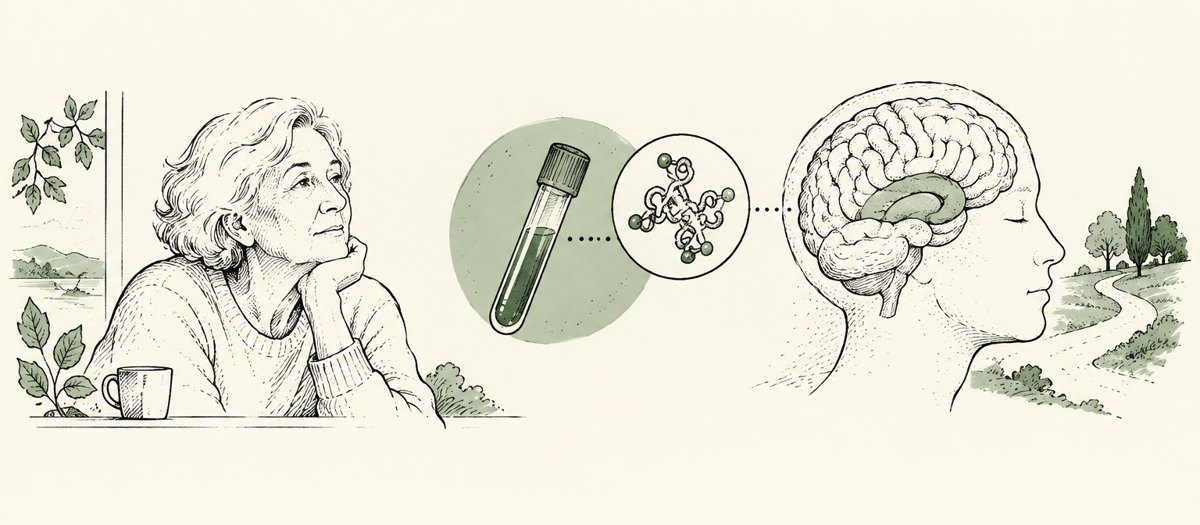
Can a blood test help detect signs of Alzheimer's disease?
Yes—a blood test identified an Alzheimer's-linked protein pattern with 84.9% accuracy in people with thinking difficulties.
The study tested p-tau217 (Alzheimer's Risk Marker) in 185 people across seven memory clinics in Catalonia, Spain. This blood marker reflects changes in a protein linked to Alzheimer's. Everyone was already having spinal fluid tests as part of routine care. Researchers compared blood results with spinal fluid evidence of amyloid, another Alzheimer's-linked protein.
Blood samples followed the same handling steps and went to one lab. The lab used an automated test called Lumipulse G. Results were consistent across clinics. Only one hospital had prior experience with Alzheimer's blood markers.
Using one dividing line between positive and negative gave 84.9% accuracy. Researchers then used two dividing lines: 0.146 and 0.486 picograms per milliliter. These created low, middle, and high likelihood groups for amyloid findings.
That approach gave a clearer result for 57.3% of people, with 95.3% accuracy within that group. But 42.7% landed in the middle zone, without a clear answer. The higher accuracy did not apply to everyone tested.
For BioSocial members, the key is context, not chasing a lower number. These results came from people with thinking difficulties, not general wellness screening. A blood result alone does not establish an Alzheimer's diagnosis. The study also did not test whether changing habits changes this marker.
When comparing your own results with community peers, the test name matters. Keeping the test method, units, and report's ranges alongside your number can make those conversations more useful. These study cutoffs are not universal targets for every test.
If you've tracked this marker, what did your report show, and how did it explain your result?
Comments
No comments yet.