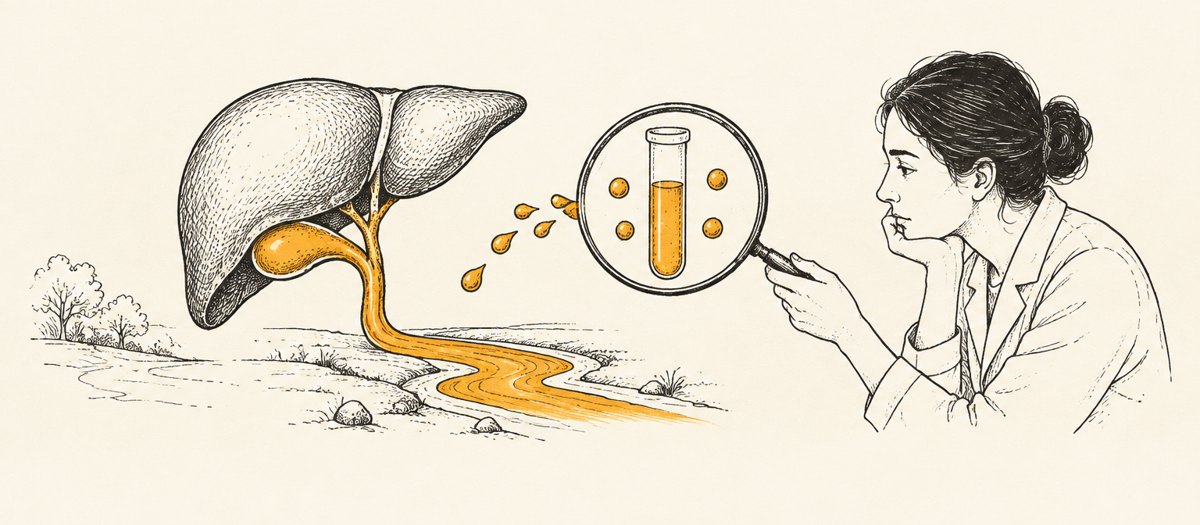
Can bilirubin tests help catch liver problems in newborns?
Testing bilirubin’s separate forms can help spot serious liver problems in newborns earlier, when timely surgery matters.
A 2026 review in *Advances in pediatrics* focuses on babies with jaundice. Jaundice is yellowing of the skin or eyes. The review highlights biliary atresia, a disease that blocks bile drainage from the liver. It is the most common reason children need a liver transplant. Finding it early matters because outcomes depend on timely surgery.
For the Bilirubin (Total) community, the key point is looking beyond the total. That number combines different forms of bilirubin. Testing those forms separately helps distinguish common newborn jaundice from problems with bile flow. The review highlights adding Direct Bilirubin to newborn blood tests. This measures the form processed by the liver. It also describes ultrasound, which uses sound waves to make images.
New blood markers and genetic tests may also help find the disease sooner. But the supplied summary gives no test accuracy rates or measured improvement in outcomes. It reports updates in testing, rather than results from one group of babies. The main takeaway is earlier recognition, not proof that one test catches every case.
For members tracking their own bloodwork, this highlights why test names matter. A total result and a breakdown of its forms provide different information. Keeping those labels with uploaded results can make community comparisons clearer. This review concerns newborns; it does not establish targets for adult bloodwork. Family experiences may also help others understand how testing unfolded over time.
What has your experience been with bilirubin testing, either in your own records or during newborn jaundice in your family?
Comments
No comments yet.