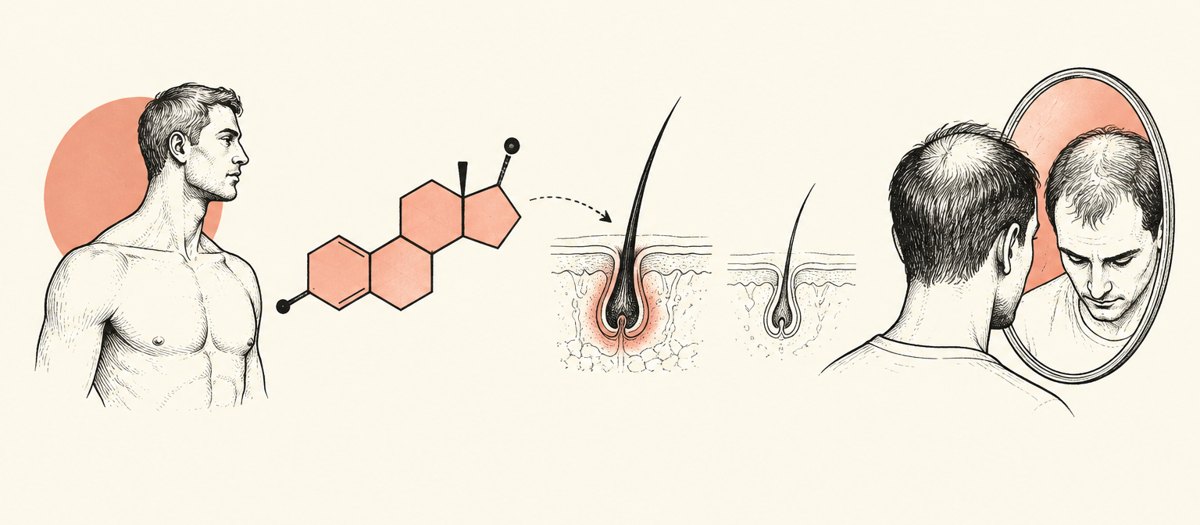
What can comparing testosterone and dihydrotestosterone show?
Comparing these hormones can help describe a rare inherited hormone difference, supported by a study of 1,689 elite athletes.
The study measured DHT (Dihydrotestosterone) and Total Testosterone, along with another hormone. Researchers tested 5,516 blood samples from 889 men and 800 women. All were elite track-and-field athletes. Testing took place in 19 labs using a method that separates and measures hormones.
The key measure was the ratio between the two linked hormones. This means dividing the first hormone’s blood level by the second’s. The reported ratio was 14.4 in men and 3.7 in women. It was 32.0 in a small group of female athletes with XY chromosomes and differences in sex development. Samples linked to pregnancy or hormone doping were excluded.
Among athletes with these inherited differences, 12 had a condition that limits hormone conversion. Two had a condition that changes how the body responds to these hormones. The authors concluded that the ratio could help describe the conversion condition in elite athletes. That does not make it a stand-alone test for everyone.
For BioSocial members, the useful takeaway is about context, not target numbers. These elite-athlete results do not set an ideal ratio for everyday health. The study also did not test whether changing either hormone improves health or performance.
When comparing your uploaded bloodwork with community peers, paired results offer more context than one isolated value. Keeping the test method and units visible can make those conversations clearer.
What have you noticed when tracking these two hormone results together over time?
Comments
No comments yet.